Best Heel Heights for Comfort Explained
The moment a heel looks exquisite but feels impossible after twenty minutes, elegance loses its authority. That is why the conversation around the best heel heights for comfort matters so much. True luxury is not simply visual impact - it is the confidence of walking beautifully, standing longer, and wearing a striking silhouette without negotiation.
What are the best heel heights for comfort?
For most women, the best heel heights for comfort sit between 2 and 3.5 inches. This range tends to create a flattering line without forcing the foot into an extreme angle. It offers enough lift to feel polished and intentional, yet usually avoids the sharp pressure that often comes with very high arches.
That said, comfort is never determined by a number alone. A 3.5-inch heel on a well-balanced last can feel calmer than a poorly designed 2.5-inch pair. The pitch of the shoe, the placement of the heel, the shape of the toe box, the padding under the ball of the foot, and the way the upper holds the foot all change the experience. In a couture-minded approach to footwear, heel height is only one element in a more refined equation.
Why heel height feels different from one shoe to the next
Two shoes can share the same measured height and feel entirely different. This is where many women are misled. They assume a lower heel is always more wearable, when in reality the internal architecture matters just as much as the external measurement.
Pitch is often more important than height
Pitch is the angle created between the heel and the forefoot. A platform, even a discreet one, can reduce pitch and make a taller heel feel more manageable. A shoe with no platform and a steep incline may create more pressure on the ball of the foot, even if the stated height seems moderate.
This is why a 4-inch platform sandal may feel easier for an evening event than a 3-inch pump with a severe arch. The foot responds to pressure distribution, not branding language.
Heel placement changes balance
A heel positioned directly under the natural center of gravity usually feels more stable. If the heel sits too far back or too narrow for the design, the wearer compensates with muscle tension. That tension becomes fatigue, and fatigue changes posture.
The upper decides how supported you feel
A slingback, ankle strap, boot, or closed pump can anchor the foot more securely than a minimal mule. The less the upper supports the foot, the more effort your toes and arch may spend keeping the shoe in place. For comfort, especially at higher heights, support is often what preserves grace.
The most comfortable heel heights by category
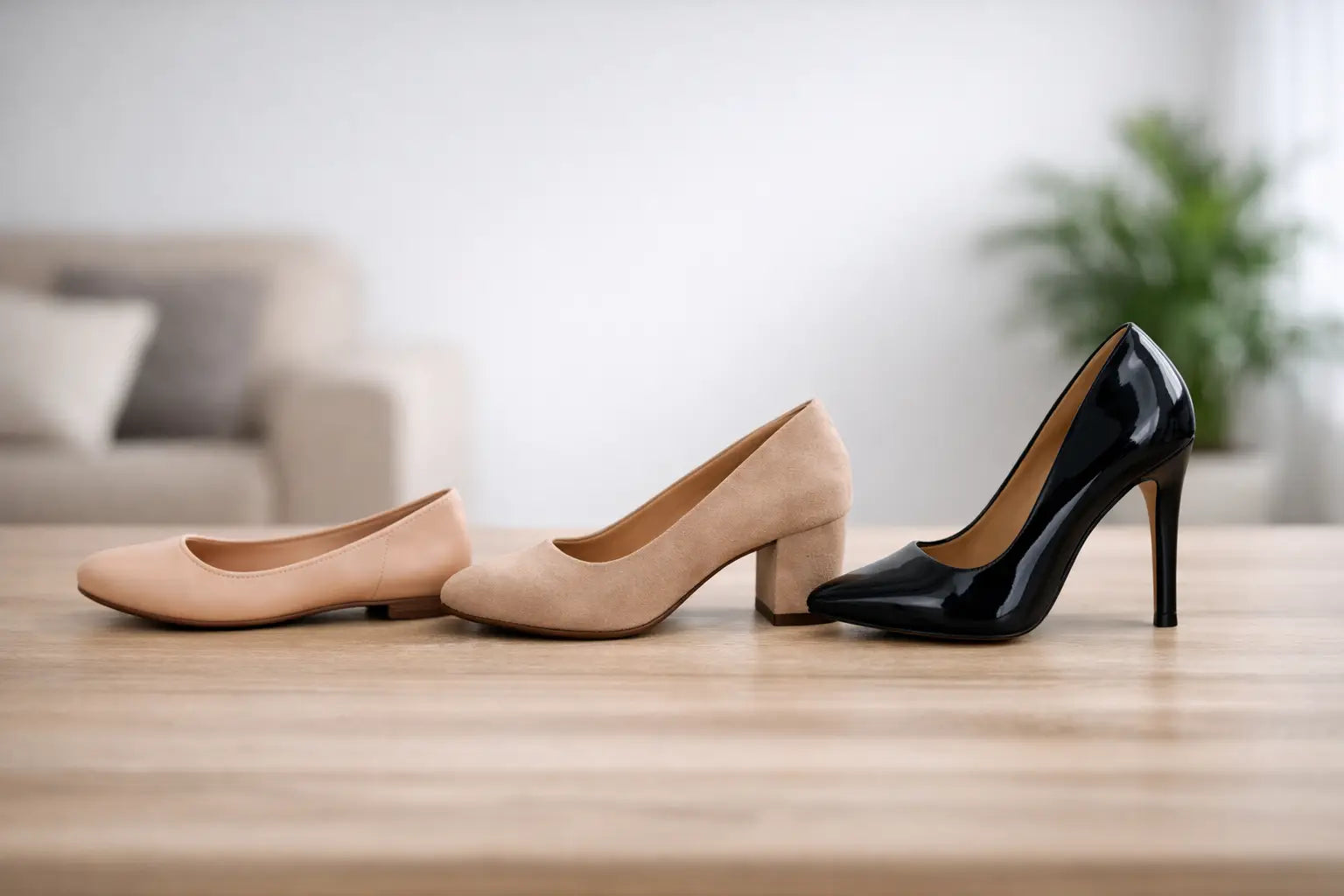
A low heel of 1 to 2 inches is usually the easiest for long wear, commuting, and professional settings where hours on foot are expected. This height offers elevation without asking too much of the arch. It can feel poised, discreet, and remarkably versatile, especially in pointed pumps, refined sandals, and elegant boots.
A mid heel of 2 to 3 inches is often the sweet spot. It creates a more sculpted line through the leg, feels dressier than a low heel, and usually remains realistic for dinners, meetings, weddings, and gallery evenings. For many women, this is where beauty and practicality meet.
A higher heel of 3 to 4 inches can still be comfortable when the shoe is thoughtfully made and properly fitted. This range tends to suit occasions where style presence matters and wear time is more controlled. A secure upper, balanced pitch, and quality materials become especially important here.
Above 4 inches, comfort becomes highly individual. Some experienced heel wearers feel entirely at ease in this territory, particularly with platforms or bespoke shaping. Others experience immediate forefoot pressure. These heels can be extraordinary, but they ask more from the foot and more from the maker.
Best heel heights for comfort by occasion
The right answer often changes with the room you are walking into. For work, many women prefer 2 to 3 inches because that range holds authority without distraction. It works through long corridors, city sidewalks, polished lobbies, and hours of standing conversation.
For weddings and evening events, 3 to 4 inches often feels appropriate because the silhouette is more dramatic and the wear window is usually shorter. Even then, surface matters. A garden party, historic venue, or cobblestone courtyard may call for a block heel or a wider base over a slender stiletto.
For travel or all-day wear, staying closer to 1.5 to 2.5 inches is often the wiser choice. Luxury is diminished when every step becomes calculation.
Heel shape matters as much as heel height
A stiletto and a block heel at the same height will not feel the same. The stiletto gives a sharper visual finish and a more sensual posture, but it also concentrates weight into a smaller point of contact. A block heel spreads weight more evenly and often offers greater stability, particularly for outdoor events or long standing periods.
Kitten heels deserve more respect than they sometimes receive. Around 1.5 to 2 inches, they can be exceptionally elegant and surprisingly modern when the proportions are right. They are not merely practical. In the right design, they are precise, polished, and unmistakably chic.
Wedges and platforms reduce strain for some wearers, though they do alter the visual mood of a shoe. Whether they feel refined or too casual depends on material, cut, and overall execution.
Why bespoke fit changes comfort completely
Mass sizing works by approximation. Comfort, however, is personal. The width of the forefoot, the slope of the toes, arch height, ankle shape, gait, and weight distribution all influence how a heel behaves on the body.
This is where a made-to-order or atelier approach becomes transformative. When the proportions of the shoe respond to the wearer rather than forcing the wearer to adapt, a higher heel can become far more viable. Fine materials also matter. Leather that softens beautifully, linings that reduce friction, and construction that supports the foot without stiffness all shape comfort in quiet but decisive ways.
For a woman who loves statement heels, customization is not indulgence for its own sake. It is often the difference between a shoe that is admired and one that is truly worn.
How to choose your ideal heel height
Begin with your real life, not your fantasy calendar. If you spend most evenings seated at formal dinners, you may be comfortable in a higher, more dramatic silhouette than someone navigating events that involve stairs, transfers, long receptions, or city walking.
Next, consider your natural tolerance. If you rarely wear heels, jumping directly into 4 inches is usually unkind to the body. A 2.5-inch heel may look slightly quieter, but it often feels far more assured. Confidence has its own glamour.
Pay attention to where you feel strain. If pressure builds at the ball of the foot, the pitch may be too steep. If your heel slips, the shoe may be too long or too open through the upper. If your toes feel compressed, the toe box shape may be fighting your anatomy rather than complementing it.
It also helps to think in terms of wardrobe roles. One pair may be for command and longevity, another for occasion and allure. The best-heeled wardrobe is usually not built around a single perfect height, but a curated range that serves different moments beautifully.
The luxury standard: comfort should never look compromised
There is a persistent myth that beauty and comfort live on opposite sides of the mirror. In exceptional footwear, they do not. The most memorable heels create line, presence, and desire while respecting the mechanics of the body.
At Charlotte Luxury, this philosophy is central to the art of the shoe: a heel should elevate more than stature. It should elevate the experience of wearing it. When proportion, craftsmanship, and fit are handled with precision, comfort becomes part of the seduction.
The best heel height is the one that lets you move as beautifully as you look. Choose the height that keeps your posture proud, your step assured, and your evening fully your own.