Shoe Care for Leather Heels That Last
The first sign of neglect is rarely a dramatic scuff. It is the soft dulling of the leather, the slight collapse at the heel counter, the fine crease that settles where the foot bends. Shoe care for leather heels is less about rescue and more about preservation - the quiet discipline that keeps a beautiful pair poised, polished, and ready for its next entrance.
Luxury heels ask more of their materials than flats ever will. They carry weight differently, flex in smaller zones, and often spend long hours under pressure at events, dinners, and occasions where appearance matters. That means leather heels deserve care that respects both their structure and their finish. When treated properly, they do not merely last longer. They age with grace.
Why shoe care for leather heels matters
A well-made leather heel is a composition of fine elements working together. The upper must remain supple without becoming soft. The insole must support without warping. The heel tip must hold firm contact with the ground. Even the lining plays a role, especially if the shoe is worn for extended hours.
This is why careless storage or quick-fix cleaning tends to show so quickly on high heels. Leather is durable, but it is also responsive. It absorbs moisture, reacts to friction, and remembers pressure. Good care protects the look of the shoe, but it also preserves fit, comfort, and balance.
There is also a practical consideration. Replacing heel tips, refinishing leather, and correcting misshapen uppers is possible, but prevention is always more elegant than repair. A few deliberate habits can keep a pair looking composed season after season.
The foundation of care starts after every wear
The most effective routine is not complicated. What matters is consistency.
After wearing leather heels, let them rest before placing them back in a dust bag or closet. Shoes trap warmth and moisture from the foot, and sealing them away too quickly can encourage odor, stiffness, and damage to the lining. Give them time to air out in a cool, dry space away from direct sunlight or heat vents.
If the pair picked up city dust, a faint mark, or the residue of an evening out, wipe them gently with a soft dry cloth. This small step keeps surface dirt from settling into the leather grain. For smoother leathers, a microfiber or very soft cotton cloth is ideal. For suede or nubuck accents, the approach changes, and texture-specific tools are best, but for classic polished leather, softness is everything.
Shoe trees can help, especially for closed-toe pumps, because they support shape and reduce deep creasing. That said, fit matters. A shoe tree that is too aggressive can stretch the vamp or distort the toe box. Tissue paper is often the safer choice for delicate silhouettes or sharply sculpted lasts.
How to clean leather heels without losing their finish
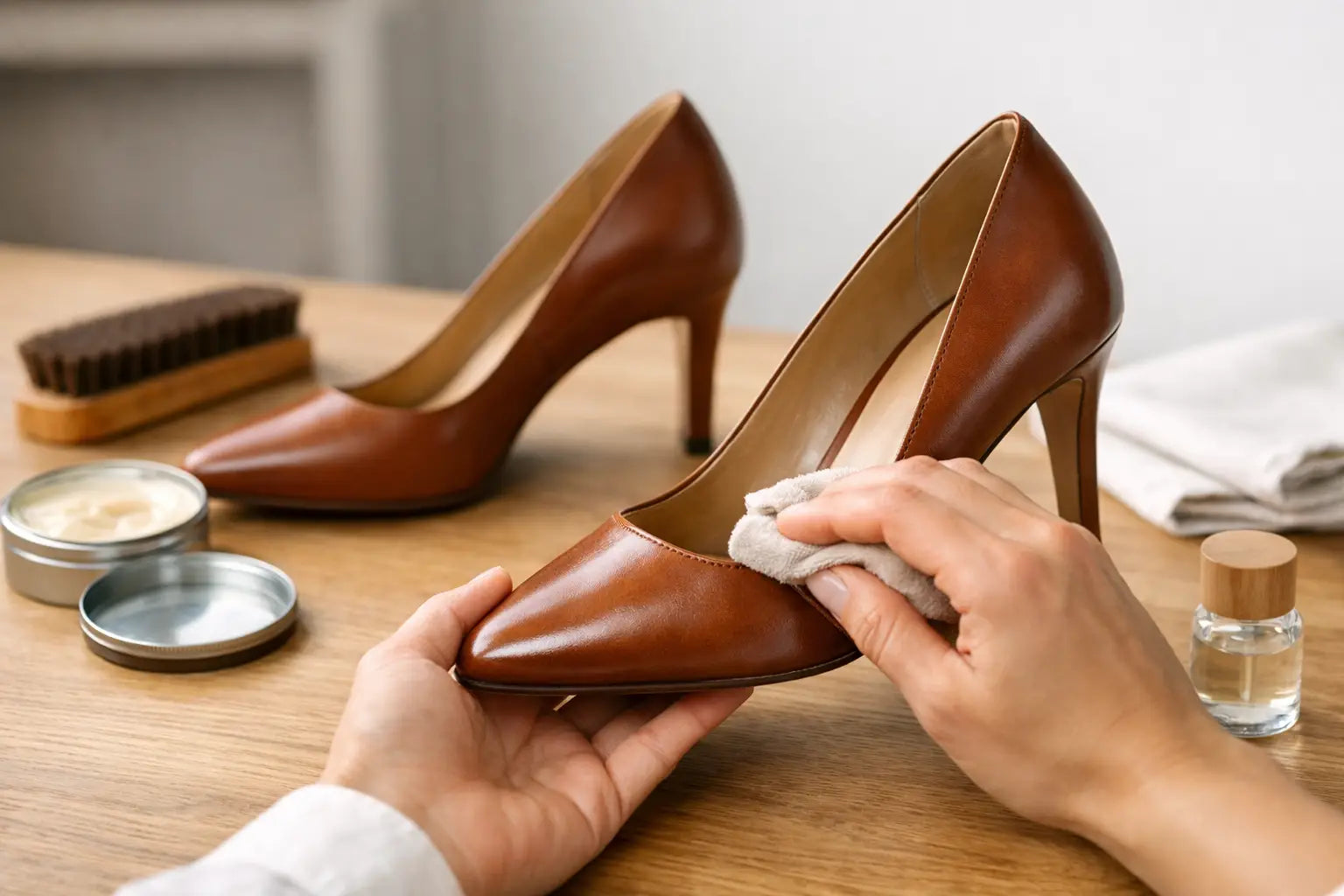
Cleaning leather heels should feel precise, not aggressive. Start with the gentlest method before reaching for any product.
For light dirt, a dry or barely damp cloth is usually enough. If marks remain, use a cleaner made specifically for fine leather and test it on a discreet area first. The goal is to lift residue without stripping oils or changing the sheen. Patent finishes, metallic leathers, and hand-finished surfaces require even more restraint, since some cleaners can cloud or dull them.
Apply product to the cloth rather than directly to the shoe. This gives you more control and prevents oversaturation. Work in small circles, then allow the leather to dry naturally. Once clean, follow with a conditioner suited to the leather type. Conditioning is what keeps leather from becoming brittle, especially in areas that flex repeatedly.
It depends on how often the shoes are worn, but most leather heels do not need frequent deep cleaning. Overcleaning can be as harmful as neglect. If a pair is worn only for special occasions, a light post-wear wipe and occasional conditioning may be enough. A pair in regular rotation will need more attention.
Conditioning and polishing with restraint
Conditioner restores suppleness. Polish restores presence. They are not the same thing, and using too much of either can overwhelm a refined shoe.
A small amount of leather conditioner applied every few wears, or whenever the leather begins to look thirsty, helps maintain flexibility and finish. Focus on the upper rather than the sole, and keep product away from delicate stitching where buildup can collect.
Polish should match the tone of the leather as closely as possible. Neutral polish is useful, but it is not always ideal for rich, saturated shades because it may add shine without reviving depth. A color-matched cream can refresh the surface beautifully, provided it is used sparingly. Buff gently with a soft cloth until the shoe regains a natural luster rather than a heavy gloss.
For fashion-forward finishes, less is often more. High-shine calfskin and softly brushed leather can lose their character if layered with too many products. The best result is a finish that looks cared for, not coated.
Protecting heel structure, soles, and shape
The leather upper often gets the attention, but the architecture of the heel deserves equal care.
Heel tips wear down faster than many people realize, especially on pavement, stone, and uneven city streets. Once a tip is too worn, the balance of the shoe changes and the heel itself can become damaged. Inspect them regularly. Replacing heel tips early is simple and discreet. Waiting too long can lead to a far more visible repair.
Soles also tell the story of wear. Leather soles are elegant, but they are vulnerable to moisture and abrasion. If you wear your heels often, adding a thin protective sole can extend their life without changing the line of the shoe too dramatically. Some purists prefer to keep soles untouched, particularly on occasion shoes, and that is a valid choice. But for frequent wear, protection is usually a wise compromise.
Storage matters just as much as maintenance. Keep heels upright, supported, and separated enough that buckles, embellishments, or pointed toes do not press against neighboring pairs. Dust bags are useful for long-term storage, but for daily accessibility, open shelving in a temperature-stable closet often works better. The point is not simply tidiness. It is preserving the silhouette.
What to do about scuffs, water, and stains
Even a carefully worn pair will meet the real world.
A minor scuff on smooth leather can often be softened with a fingertip's worth of conditioner or cream polish buffed into the area. The key is blending rather than rubbing aggressively at one spot. If the leather is deeply scratched or the finish has been removed, home treatment may only improve it slightly.
Water is more complicated. If heels get wet, blot them immediately with a clean cloth and let them dry naturally with tissue inside to support shape. Never place them near direct heat. Leather that dries too fast can stiffen, crack, or shrink unevenly. Once dry, condition lightly to restore balance.
Oil stains, dye transfer, and heavy salt marks are rarely worth guessing at. On a luxury pair, trial-and-error can make the damage worse. Professional care is often the more discerning decision, particularly when the leather has a special finish or a custom dye.
A rotation is part of care
One of the most overlooked forms of shoe care for leather heels is simply not wearing the same pair too often.
Leather performs best when it has time to recover between wears. Rotation allows moisture to evaporate fully, preserves the interior, and reduces stress on the same flex points day after day. For women who rely on heels as part of a polished wardrobe, this matters. A thoughtful rotation is not indulgence. It is maintenance with style.
It also helps to wear your finest pairs in the settings they were made for. A stiletto designed for evenings, formal events, or arrival moments should not be drafted into every commute. Elegance lasts longer when use aligns with design.
When professional care is the better choice
There is a point where expertise matters more than enthusiasm.
If the heel wobbles, the leather finish is lifting, the insole is detaching, or the toe has suffered visible structural damage, professional restoration is the right move. The same applies to exotic skins, intricate embellishment, custom finishes, and made-to-order pairs where detail and fit are part of the value. Charlotte Luxury understands this intimately - craftsmanship deserves care that is equally considered.
Good maintenance at home preserves beauty. Skilled repair preserves integrity. Knowing the difference is part of owning luxury well.
A remarkable pair of leather heels should never feel disposable. Treat them with a steady hand, store them with intention, and intervene early rather than late. Beauty holds longer when it is cared for with the same discernment that chose it.