How Custom Heels Are Designed
A remarkable heel begins long before the first sketch. When clients ask how custom heels are designed, they are often thinking about color, height, or embellishment. In an atelier, the process starts somewhere more intimate - with posture, movement, proportion, and the impression a woman intends to leave when she enters a room.
Custom heels are not simply decorated shoes. They are composed around a person. The line of the arch, the pitch of the foot, the shape of the toe, and the balance between seduction and wearability all matter. A made-to-order heel must do something ready-made footwear rarely achieves with consistency: it must look exquisite and feel intentional from every angle.
How custom heels are designed in a luxury atelier
In a luxury setting, design begins with conversation. A client may arrive with a dress in mind, a gala on the calendar, or a very specific memory she wants the shoe to capture. Sometimes the request is visual - a lacquered finish, a sculpted stiletto, a pointed silhouette softened by satin. Sometimes it is practical - a need for greater stability, more room at the forefoot, or a heel height that remains elegant through an entire evening.
That exchange defines the design direction. The most successful bespoke heels are not built from trends alone. They are shaped by occasion, wardrobe, body mechanics, and personality. A dramatic heel for a black-tie event may allow for sharper architecture and richer surface detail. A pair intended for repeated wear may call for subtler proportions, softer materials, and a construction approach that privileges longevity.
This is where true luxury separates itself. Bespoke design is not an exercise in excess. It is an exercise in precision.
The silhouette comes first
Every custom heel begins with silhouette because shape determines nearly everything that follows. The toe line sets the tone immediately. A pointed toe can lengthen the leg and create a more commanding profile, while an almond or softly squared toe often feels more modern, relaxed, or forgiving in fit.
Then comes the topline - how the shoe opens across the foot. A lower cut can appear sensual and elongating, but it also changes support. A higher vamp can feel secure and refined, yet it may alter the visual lightness of the design. These are not minor cosmetic choices. They affect how the shoe wears, how it photographs, and how it flatters the foot.
The heel itself is another architectural decision. A slim stiletto communicates sharp glamour. A flared heel can introduce drama with greater balance. A block or sculptural heel may offer more stability, though it creates a different mood. The right answer depends on the client, the occasion, and how the shoe is meant to perform.
Heel height is about more than inches
Many women begin with a number in mind - 85 mm, 100 mm, 120 mm. In reality, comfort is not dictated by height alone. It is determined by pitch, which is the angle created between the heel and the ball of the foot. Two shoes with the same heel height can feel completely different depending on platform, toe spring, insole construction, and the last they are built on.
This is one of the most misunderstood parts of custom footwear. A beautifully designed high heel must distribute pressure with intelligence. If the pitch is too aggressive for the foot shape, the wearer will feel it immediately. If the proportions are refined correctly, a higher heel can remain surprisingly poised and wearable.
That is why custom design often involves adjustment rather than indulgence. A client may request a dramatic height, but the final recommendation may be slightly lower or supported by subtle structural changes. In luxury, restraint is often what makes the design feel more powerful.
The role of the last in how custom heels are designed
The last is the form around which the shoe is built, and it is the hidden foundation of everything. If the silhouette is the visible statement, the last is the private engineering. It determines fit, posture, balance, and the way the foot sits within the design.
In bespoke work, the last may be selected and modified according to measurements, foot width, arch placement, toe shape, and any specific sensitivities the client has. One woman may need a more generous fit at the ball of the foot without losing a narrow heel grip. Another may want a sharp pointed silhouette but require internal room that prevents compression.
This is where craftsmanship becomes deeply personal. A custom heel should not force the foot to become something it is not. It should refine and support the foot while preserving the elegance of the design. That balance is difficult to achieve in mass production. In an atelier, it is the point.
Materials shape movement and mood
Once the structure is defined, materials bring the design to life. Leather, suede, satin, velvet, mesh, and exotic finishes each carry a different visual and tactile effect. Yet materials are not chosen for beauty alone. They affect flexibility, breathability, support, and how the shoe ages over time.
A satin pump may offer an undeniably formal allure, ideal for evening and ceremony, but it requires thoughtful care and may not suit frequent wear. Supple leather can mold beautifully to the foot and develop character with use. Suede offers softness and depth, though it demands a more careful relationship with weather and maintenance.
Lining and insole materials matter just as much. A luxurious shoe must feel considered against the skin. The interior cannot be treated as secondary. In many cases, what the wearer remembers most is not the shine of the outer finish, but the way the shoe held her foot with quiet confidence.
Details should never feel random
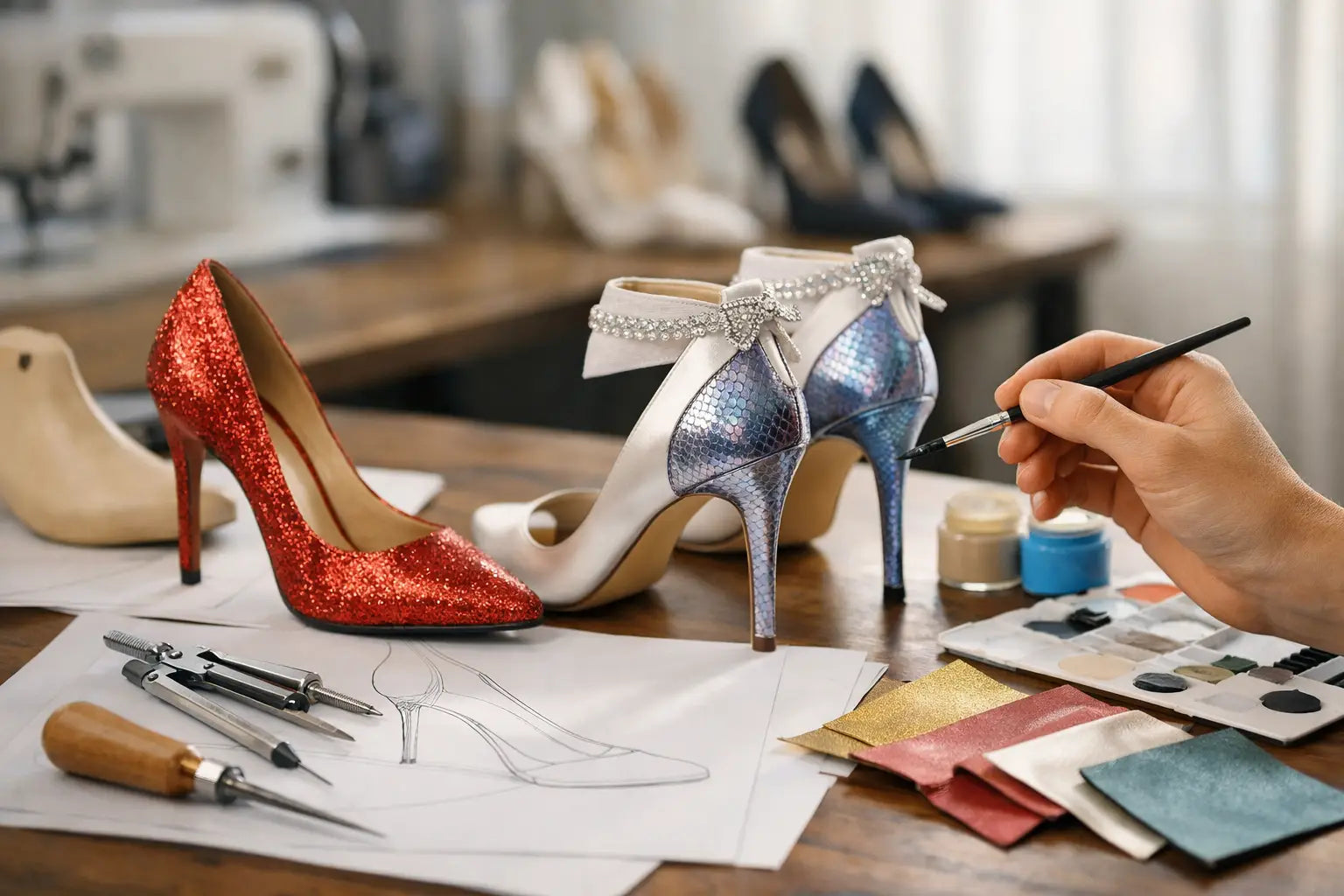
Custom heels often invite embellishment, but the finest designs use detail with discipline. Crystals, metallic hardware, bows, embroidery, contrast piping, or monogram elements can all be striking. The question is never whether a detail is beautiful on its own. The question is whether it belongs to the shoe.
A well-designed heel has a point of view. If the silhouette is already strong, too much ornament can dilute it. If the line is minimal, a single dramatic accent may be enough. Placement matters as much as selection. An ankle detail can draw the eye upward. A toe embellishment can shorten or emphasize the front of the foot depending on scale.
Luxury is often defined by editing. The most memorable custom pair is rarely the one with the most added to it. It is the one in which every decision feels inevitable.
Fit testing, balance, and finishing
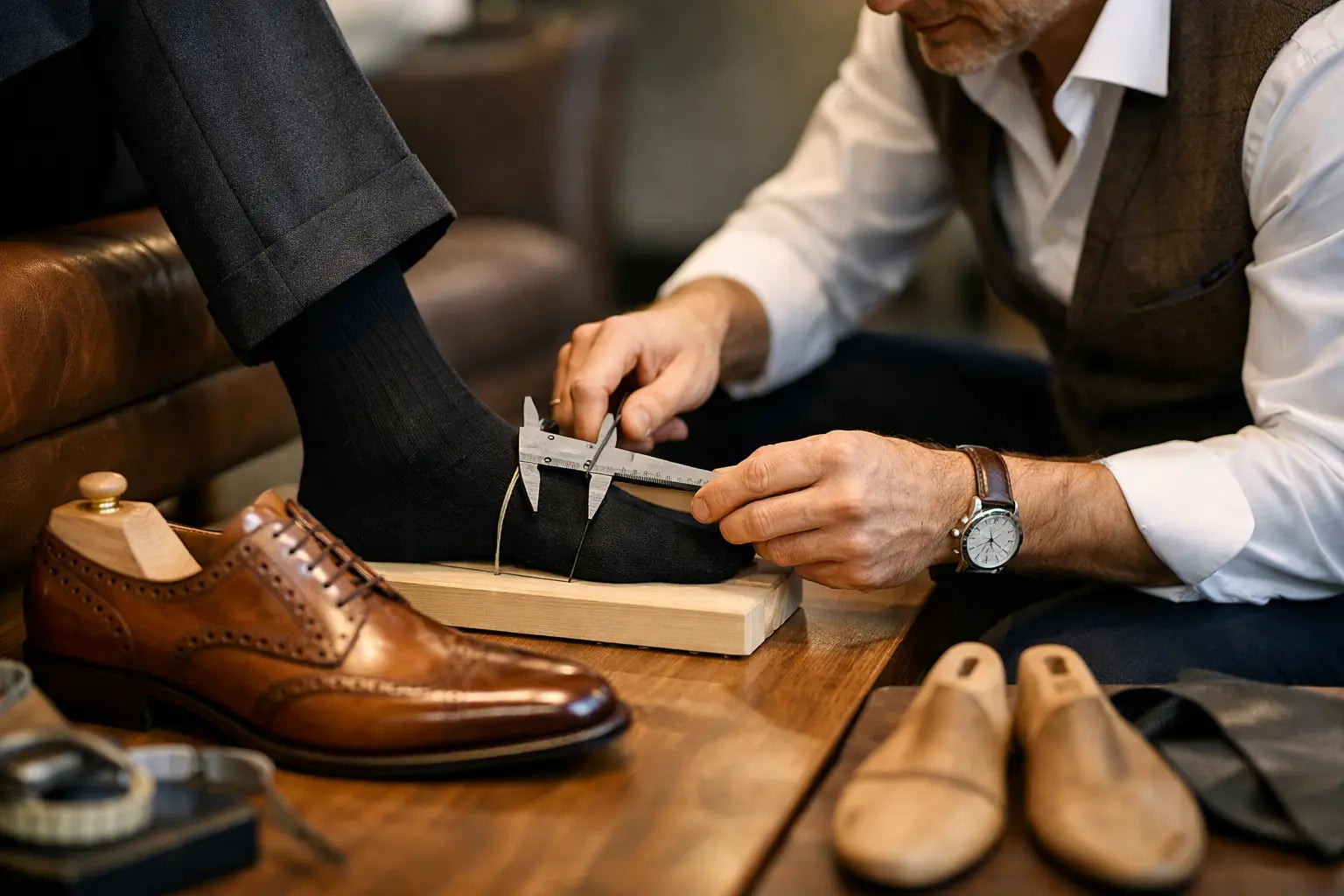
Before a custom heel is complete, the design must be tested against reality. This stage is less glamorous than the first sketch, but it is where sophistication becomes wearable. The maker evaluates grip at the heel, pressure across the forefoot, alignment of the arch, and the way the shoe moves in motion rather than in stillness.
Small refinements can transform the experience. A topline may be raised by millimeters. Padding may be adjusted. The heel position may shift slightly to improve balance. The strap placement may change to avoid rubbing or slipping. None of this is visible to the casual eye, yet it is what separates a shoe that is merely admired from one that is truly worn.
The final finish is equally exacting. Edge paint, stitching, sole treatment, hardware application, and surface consistency all need a couture level of attention. A luxury heel should feel resolved. Nothing should appear hurried, overly corrected, or disconnected from the original design intention.
Why the process is worth it
To understand how custom heels are designed is to understand why they carry a different presence. They are not pulled from a shelf to satisfy a passing impulse. They are developed through choices that respect both beauty and the woman who will wear them.
That process does require patience. Bespoke design asks for fittings, revisions, and a willingness to refine rather than rush. It may also require compromise in the right places. The highest heel is not always the most flattering. The softest material is not always the most durable. The boldest detail is not always the most timeless. But when those choices are made well, the result feels singular.
At Charlotte Luxury, that is the quiet power of made-to-order design. A custom heel becomes more than an accessory. It becomes part of how a woman is remembered - by the line it creates, the confidence it holds, and the precision with which it was made for her alone.
The finest pair never announces the effort behind it. It simply looks as though it was always meant to exist.