What Are High Heels Made Of?
A beautiful heel never begins with height alone. Ask what are high heels made of, and the real answer is not simply leather or satin - it is a composition of materials, structure, and intention. The finest pairs are built layer by layer, with each component shaping how the shoe looks, feels, moves, and endures.
For a discerning client, this matters. A high heel is not merely a silhouette that completes a look. It must hold its line through an evening, flatter the foot, support posture, and retain its elegance after wear. Materials are the difference between a shoe that photographs well for one occasion and one that becomes part of your wardrobe memory.
What Are High Heels Made Of in a Luxury Shoe?
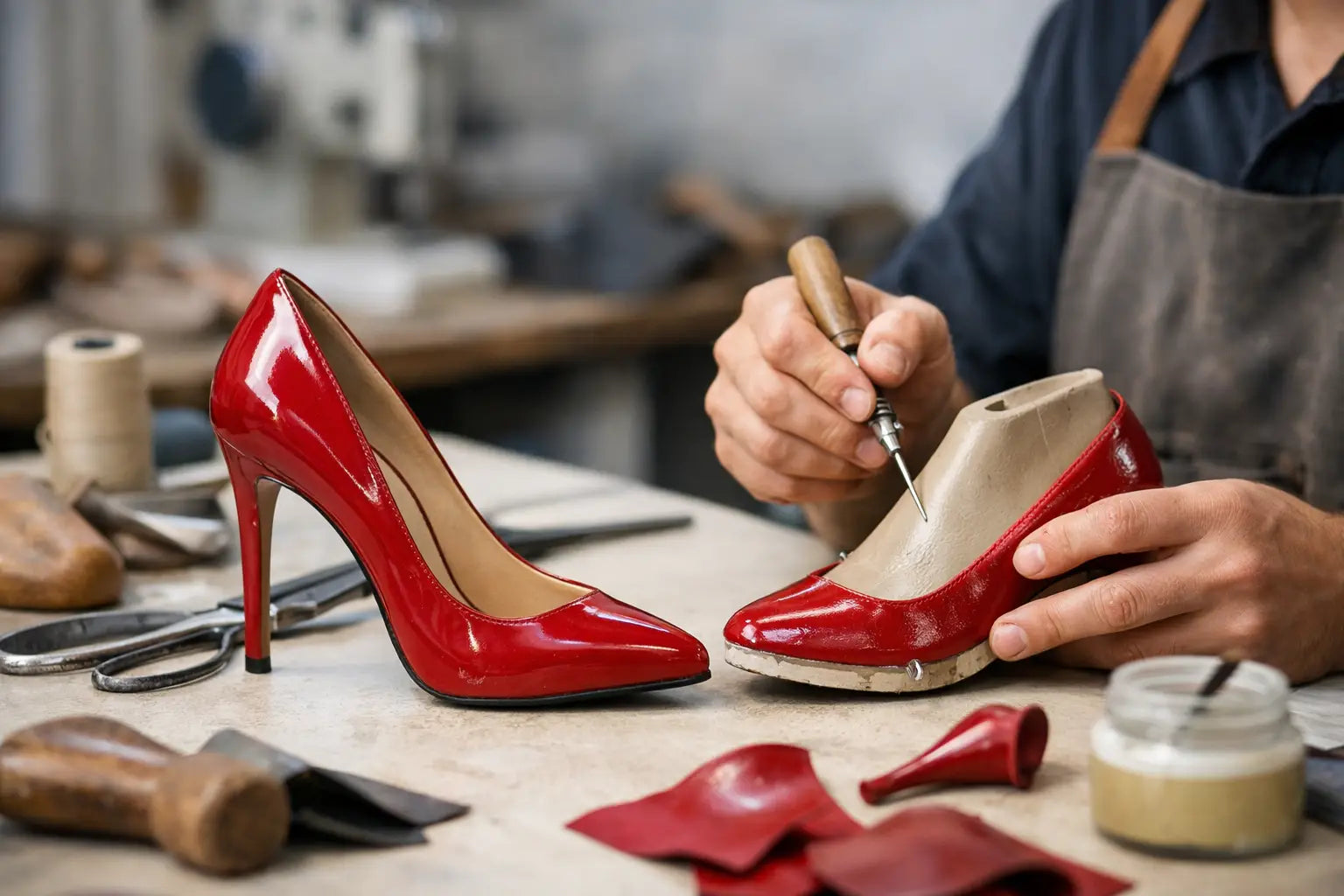
At first glance, most high heels seem to be defined by the upper - the visible exterior in leather, suede, satin, mesh, or another fashion material. Yet the upper is only one part of the story. A high heel is typically made from the upper, the lining, the insole, the outsole, the heel structure, internal stiffeners, and cushioning elements. In luxury footwear, each of these parts is chosen with more care because refinement depends on what is hidden as much as what is seen.
The upper creates the visual identity. The lining shapes comfort against the skin. The insole supports the foot. The outsole manages traction and wear. The heel itself must be engineered for balance and durability. When these elements are made from inferior materials, the result is often immediate - creasing that looks tired too soon, slipping at the heel, pressure at the ball of the foot, or instability in the stride.
The Upper: Where Design Meets Desire
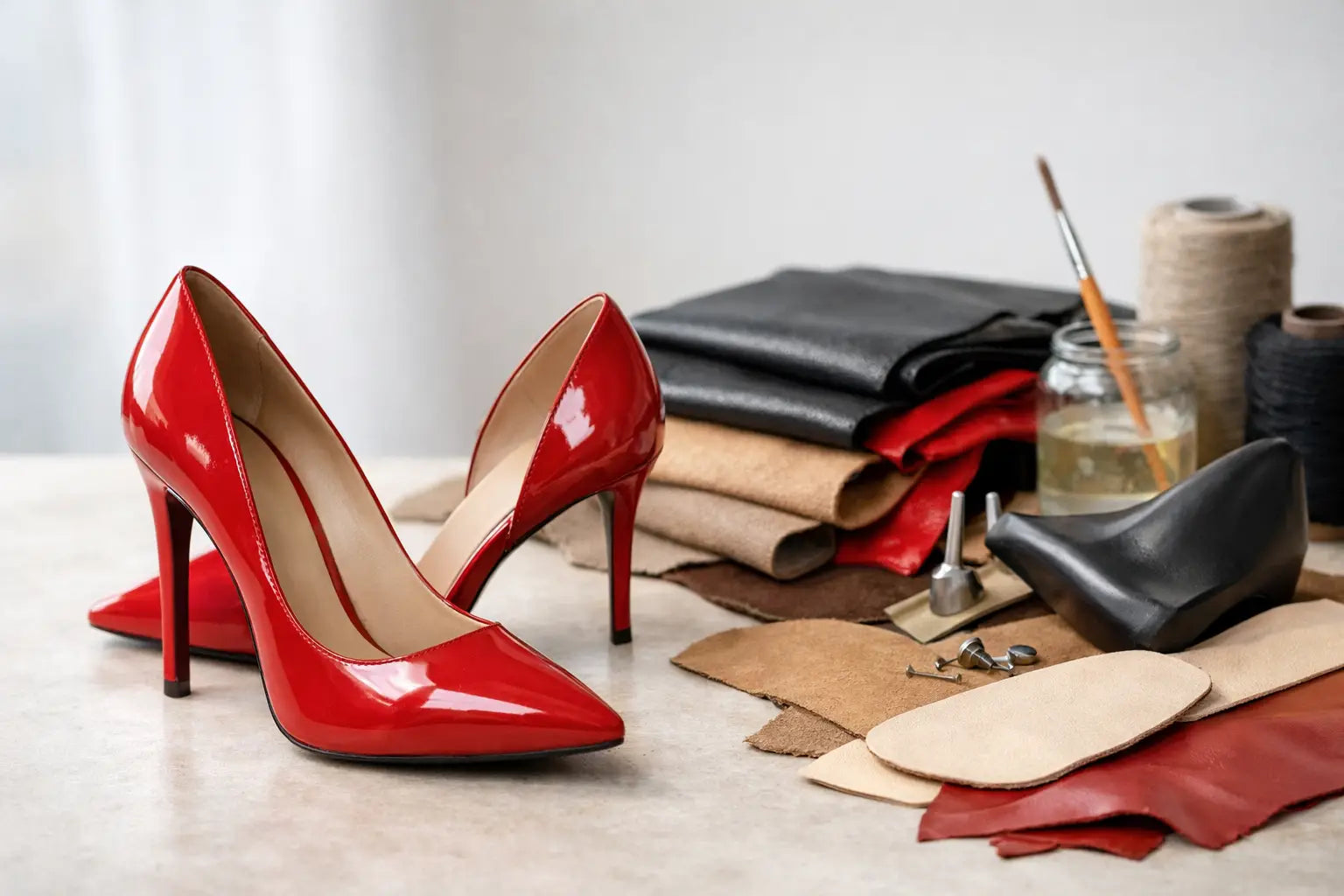
The upper is the part most women notice first, and with reason. It carries the color, finish, texture, and line of the shoe. In luxury high heels, the most common upper materials are full-grain leather, suede, satin, patent leather, velvet, and selected textile constructions.
Leather remains the benchmark because it molds beautifully over time, offers strength with flexibility, and conveys a richness that synthetic substitutes rarely match. Calfskin is especially prized for its smooth hand and elegant finish. Suede offers softness and depth, though it requires more attentive care. Satin is often chosen for evening shoes because it catches light with a refined glow, but it is more delicate and less forgiving in wet conditions or repeated friction.
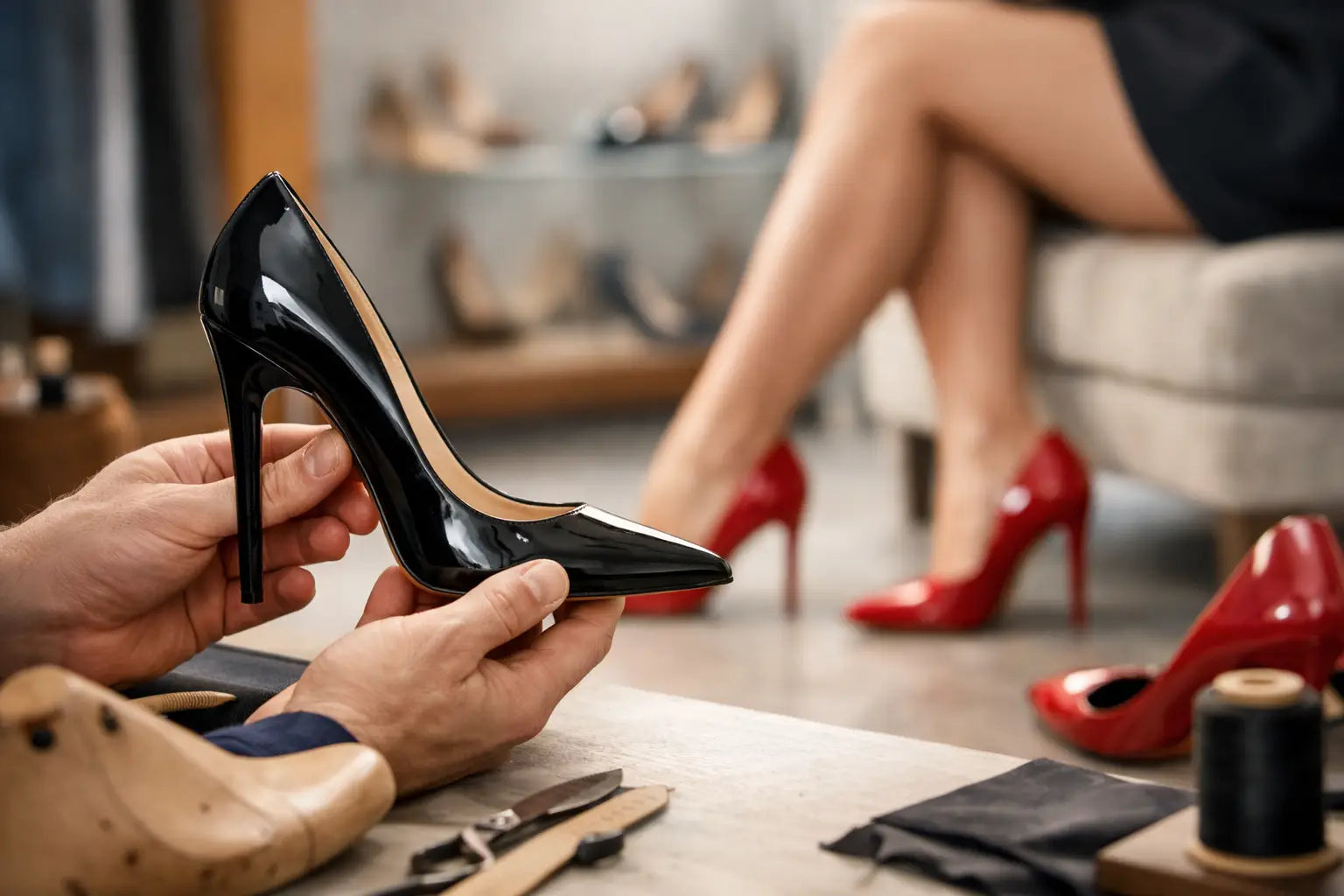
Patent finishes bring a striking, polished surface, though they can feel firmer depending on the base material beneath the coating. Mesh and lace may be used for a lighter, more sensual effect, especially when transparency is part of the design. Each choice changes the personality of the shoe. It also changes the wearing experience.
That is where luxury craftsmanship becomes decisive. A dramatic material may look exquisite, but it still needs proper support, clean cutting, and precise lasting to maintain shape. Beauty without structure tends to disappoint quickly.
The Lining and Insole: The Private Luxury
If the upper is what the world sees, the lining is what the wearer remembers. The inside of a high heel is commonly made with soft leather linings, sometimes paired with padded insoles or foam layers to soften pressure points. In better shoes, the lining is breathable, smooth, and carefully finished so the foot can settle naturally rather than rub against rough seams.
Leather lining is favored because it feels cool against the skin, adapts to the foot, and helps manage moisture more gracefully than many synthetic interiors. This can make a notable difference during long wear, especially at events, dinners, or formal occasions when a shoe must remain composed for hours.
The insole, sometimes called the sock lining in fashion terminology, often includes a leather top layer over a supportive base. In high-quality construction, this area may also include discreet cushioning beneath the ball of the foot or arch area. That cushioning does not erase the physics of a heel, but it can significantly improve wearability.
Comfort in a luxury heel is rarely about excess padding. It is about intelligent placement, proportion, and balance. Too much softness can destabilize the foot. Too little can make even a lovely shoe feel punishing.
What Are High Heels Made Of Beneath the Surface?
The hidden architecture is what separates a beautifully made heel from a merely attractive one. Inside the shoe, manufacturers use stiffeners, counters, toe puffs, shanks, and reinforcement materials to create shape and support.
The heel counter, placed at the back of the shoe, helps hold the heel cup firm so the foot does not slide excessively. The toe puff shapes and supports the front. The shank, positioned beneath the arch, is especially important in high heels. It helps the shoe maintain its form and provides structural support between the heel seat and the forepart of the sole.
Shanks can be made from steel, fiberglass, or other durable materials. In a stiletto or sharply arched silhouette, the shank plays a critical role in stability. Without proper support here, a shoe may flex incorrectly, feel unstable, or lose its shape over time.
This internal engineering is seldom visible, but it is essential to the grace of the finished shoe. A commanding silhouette depends on hidden discipline.
The Sole and Outsole: Contact With the World
The sole deserves more attention than it usually receives. In luxury high heels, outsoles are often made of leather, sometimes with protective inserts or rubber sections added for traction. Leather soles are elegant, refined, and flexible when well made. They are also associated with traditional shoemaking and a more elevated finish.
That said, leather soles are not always the most practical choice for every setting. They can be slippery on certain polished surfaces, and they wear differently than rubber. Rubber outsoles or rubber top pieces may offer better grip and durability, especially for frequent city wear. The trade-off is aesthetic and tactile. Full leather soles often feel more couture in character, while rubber elements can improve resilience and confidence underfoot.
Many premium heels balance both. A refined outsole may preserve the visual language of luxury while incorporating discreet practicality where it counts. The right choice depends on how and where the shoe will be worn.
The Heel Itself: More Than a Shape
The heel structure may be covered in leather, suede, satin, or lacquered material to match the upper, but beneath that surface there is usually a solid core. Depending on the design, the core can be made from plastic, wood, metal, or other engineered materials chosen for weight, strength, and precision.
Slim stilettos require especially careful construction. They need to appear delicate while remaining secure. Block heels, sculpted heels, and platform heels each place different demands on the internal build. A heel that is too heavy can affect gait. One that is too light but poorly reinforced can compromise stability.
At the bottom, the heel tip is typically capped with a small replaceable piece, often made from durable plastic or rubber. This modest detail matters more than many realize. A worn heel tip can alter balance, damage the heel itself, and diminish the sound and poise of each step.
Natural Materials vs. Synthetic Alternatives
Not every synthetic material is inferior, and not every natural material is ideal for every design. It depends on the desired finish, performance, and purpose of the shoe.
Natural leather generally offers better aging, breathability, and softness. It develops character and can feel increasingly personal with wear. Suede and satin bring romance and depth, though they ask for more attentive care. Wood may be used in certain heel constructions for character and strength.
Synthetics can provide consistency, lighter weight, or specific visual effects that natural materials cannot always deliver. Some modern technical materials also improve durability or reduce sensitivity to moisture. Still, in the luxury space, the concern is not only performance. It is also hand feel, visual richness, and the emotional quality of the object.
A made-to-order maison such as Charlotte Luxury understands this intimately. The finest result comes from selecting materials not for trend alone, but for the way they serve the line, the foot, and the occasion.
Why Material Choice Changes Comfort and Longevity
Two high heels can look nearly identical and wear entirely differently. One may soften to the foot, maintain its shape, and remain graceful after repeated occasions. The other may crease harshly, pinch, or feel unstable after an hour. Material choice is often the reason.
Better leather usually means better adaptation to the foot. Better lining means less friction. Better structural reinforcement means more confident posture. Better outsole construction means more elegant movement and more reliable wear.
There are always trade-offs. A satin heel may be perfect for a gala but less practical for regular use. A leather sole may feel more elevated but need more care outdoors. A very high, very slim heel may be visually arresting, yet comfort will depend heavily on pitch, platform balance, and internal support.
That is why the question is not only what are high heels made of. It is how well they are made, and whether the materials were chosen with discernment.
When you invest in a truly exceptional pair, you are not buying surface alone. You are choosing the unseen architecture that allows beauty to last, and that is where a remarkable shoe begins to earn its place in your story.