How to Break in Stilettos Without the Pain
The first hour in a new stiletto tells you everything. Not whether the heel is high, but where the shoe resists, where the leather needs persuasion, and whether the fit is asking for patience or promising regret. If you are wondering how to break in stilettos, the goal is not to force them into submission. It is to shape a beautiful shoe to your movement without compromising its line, structure, or longevity.
A well-made stiletto should feel close, supportive, and secure from the start. It should not feel painless on day one if the silhouette is sharply sculpted and the materials are fine. That is especially true with pointed toes, slender heel pitches, and formal evening styles designed to hold a refined posture. Breaking them in is less about stretching them dramatically and more about softening pressure points, allowing the upper to relax, and training your stride to the shoe’s architecture.
How to break in stilettos the right way
The most common mistake is wearing a new pair for an entire evening straight from the box. Even exquisite shoes need a short private introduction before they make a public entrance. Start indoors, on clean floors, for 20 to 30 minutes at a time. This gives the upper a chance to warm to your foot while letting you notice friction at the toe box, heel counter, or vamp before it becomes a blister.
On the second and third wears, extend the time gradually. An hour at home, then a brief outing, is usually enough to tell whether the shoe is settling properly. If the discomfort decreases with each wear, the break-in process is working. If the pain intensifies or feels sharp and structural, the issue is fit, not stiffness.
Leather responds beautifully to warmth, movement, and repetition. Satin, patent finishes, embellished uppers, and highly structured materials require a gentler hand. They may soften less, which means sizing and shape matter even more. A shoe can become more forgiving. It will not become a different shoe.
Start with fit, not force
No break-in technique can rescue the wrong size or the wrong last. If your toes are aggressively compressed, your heel lifts with every step, or the arch support hits the wrong place, stretching tricks will only mask a deeper mismatch. Luxury footwear should contour the foot with intention. It may feel snug, but it should never feel punishing.
Pay close attention to three areas. The toe box should hold the foot neatly without crushing the toes. The heel should sit securely with minimal slipping. The vamp, which is the section across the front of the foot, should feel supportive rather than suffocating. If one of these areas is off, the elegant thing to do is address the fit early rather than endure avoidable damage to both foot and shoe.
This is where craftsmanship matters. A thoughtfully made stiletto often breaks in more predictably because the materials are better and the construction is more deliberate. The shoe is meant to adapt with grace, not collapse with wear.
Use heat carefully, if at all
There is a reason stylists and cobblers speak about warmth with caution. Gentle warmth can help natural leather relax slightly, but too much heat can dry it out, distort the shape, or damage delicate finishes. If you want to soften a leather stiletto at home, wear a pair of thin socks and walk in the shoes for short intervals indoors. Your body heat does most of the work.
A hair dryer can be tempting, but it is rarely the most elegant solution. Direct heat is unpredictable, especially on patent leather, dyed skins, or shoes with adhesives and decorative detailing. For premium heels, restraint is usually wiser than improvisation.
Protect the pressure points
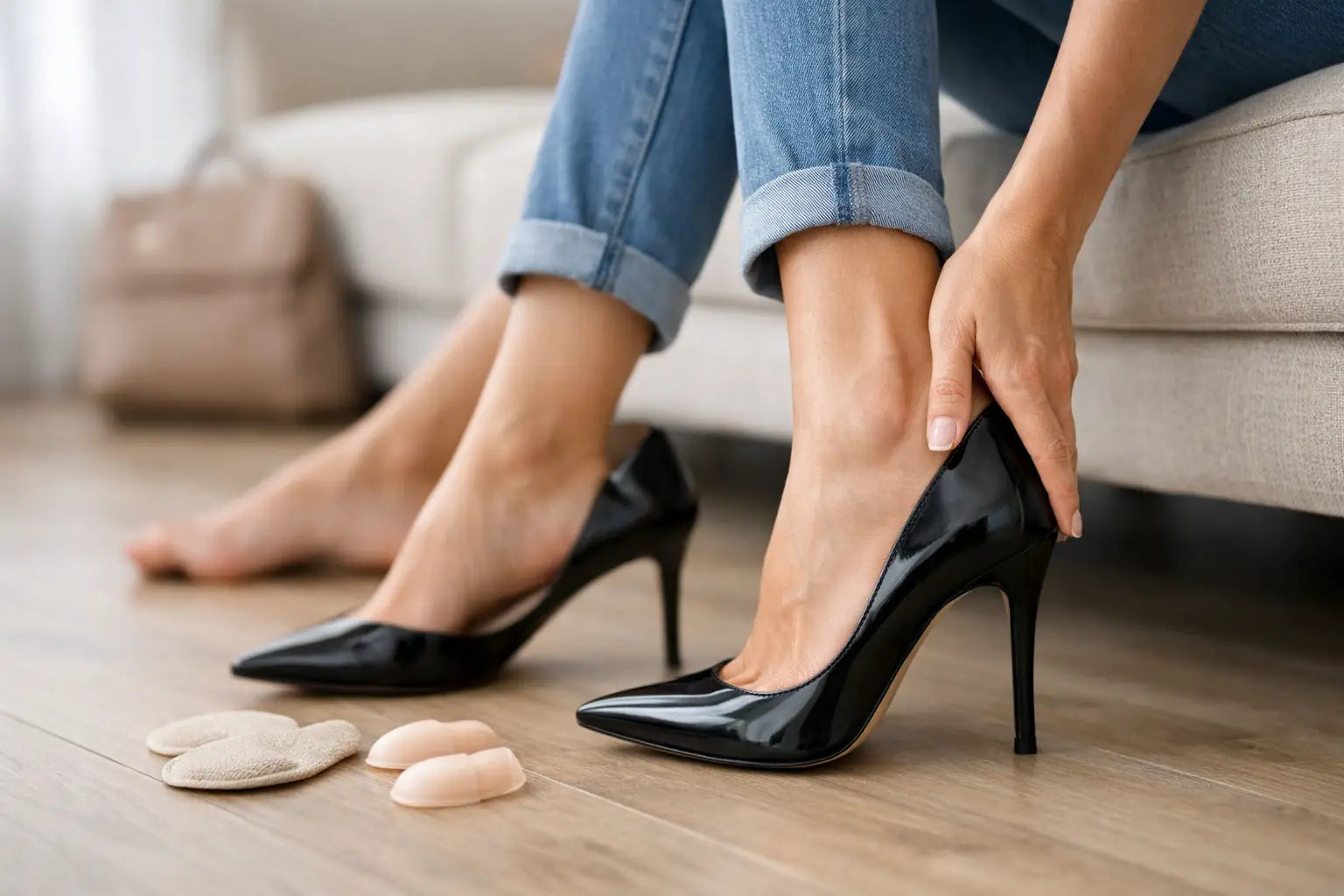
Most stilettos do not hurt everywhere. They hurt in very specific places. The back of the heel, the side of the little toe, or the top edge where the upper meets the foot are common friction zones. Once you identify them, protect them before your next wear.
A discreet blister barrier or cushioned strip can be useful during the first few outings. Place it on your skin rather than on visible areas of the shoe if you want to preserve the interior finish. For the ball of the foot, a slim forefoot insert can reduce sliding and soften pressure without overcrowding the fit. Thin is the operative word. Too much padding can make a refined shoe feel smaller and more unstable.
Walk differently in a stiletto
Part of breaking in a heel is breaking in your movement. A stiletto asks for a more deliberate stride than a block heel or flat. If you rush, grip with your toes, or let your weight fall heavily into the forefoot, discomfort arrives quickly even in a beautifully made pair.
Stand tall first. Let your shoulders settle, engage your core lightly, and place each step with intention. Aim for a heel-to-toe motion, but keep it refined and measured. Smaller steps create better balance and less pressure on the front of the foot. When your body aligns with the shoe, the shoe often feels instantly more wearable.
This is why a break-in period should include walking, standing, and turning. You are not only softening the materials. You are learning the pitch, the balance point, and the posture the design requires.
When to stretch and when to stop
If a stiletto is just slightly tight across the toe box or forefoot, professional stretching may help. A cobbler can target a precise area and work with the material in a controlled way. That is especially valuable for premium shoes where preserving the silhouette matters.
At-home stretching sprays and devices can work on plain leather, but they are not universally suitable. Embossed finishes, metallics, suede, satin, and crystal or hardware embellishments all carry more risk. The more elevated the fabrication, the less appealing a DIY experiment becomes.
There is also a point where stretching should stop. If the shoe feels short in length, no amount of stretching will create elegant comfort. If the heel pitch feels incompatible with your posture or the shoe cuts into bone rather than soft tissue, it is not a break-in issue. It is simply not your fit.
Small habits that make a major difference
Breaking in stilettos is often won by details. Wear them on carpeted or smooth indoor surfaces first, not on city pavement. Keep your feet dry, since moisture increases friction. If you know you swell slightly by evening, do your first proper wear in the late afternoon rather than first thing in the morning.
It also helps to alternate new heels with a pair you already trust. This gives your feet recovery time and lets the new pair soften gradually instead of being tested under pressure. For event dressing, bring your new stilettos into your routine before the occasion itself. A shoe should never be a stranger on the night it is meant to make an impression.
If the sole feels slick, add a non-slip sole protector before a long outing. This does not break in the shoe, but it improves confidence and reduces the tense, careful walking that makes stilettos feel harder than they are.
Luxury shoes deserve a patient approach
There is a difference between wearing a shoe and cultivating it. Fine stilettos are shaped by materials, workmanship, and proportion. They respond best to patience, not shortcuts. At Charlotte Luxury, that philosophy sits at the center of the atelier mindset: beauty is not separate from comfort, but comfort in a sculpted heel is earned through precision, not compromise.
Some pairs will soften quickly. Others, especially those with dramatic lines or more structured construction, take a few wears to become fully fluent on the foot. That is normal. The right stiletto should begin to feel less like an object you manage and more like an extension of your posture.
If you treat the break-in process as part of the experience rather than an inconvenience, you protect both the design and your ease. And that is the real standard of elegance - not how long you can tolerate a heel, but how effortlessly you can inhabit it.