How Long Do Custom Shoes Take?
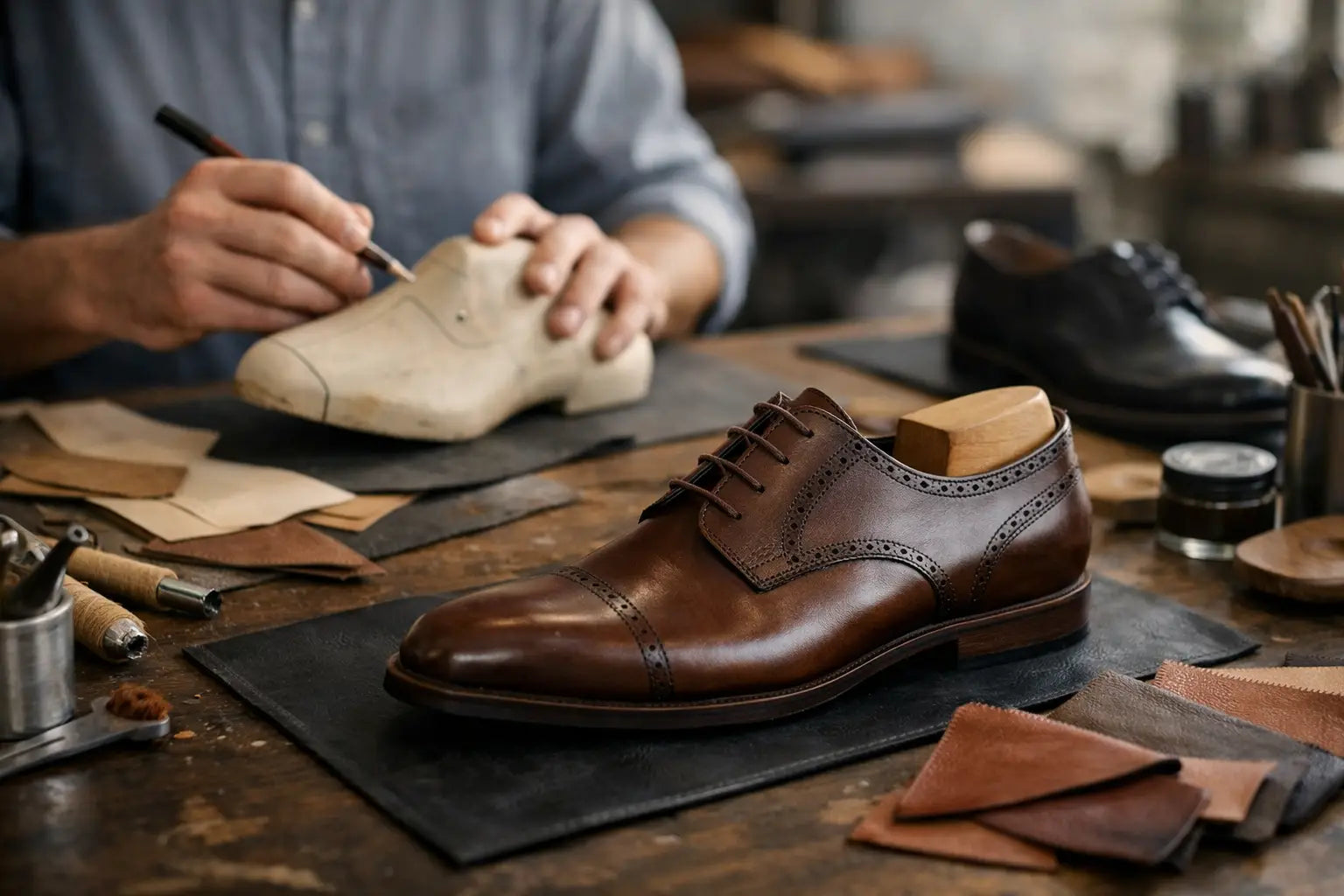
When a client asks how long do custom shoes take, the real question is usually deeper: how long until something rare, personal, and beautifully made is ready to be worn. Bespoke footwear is not waiting on a shelf. It begins with intention, moves through skilled hands, and reaches its final form only after decisions about silhouette, materials, fit, and finish have been honored properly.
For that reason, custom shoes rarely follow the rhythm of standard retail. A made-to-order pair may take a few weeks. A fully bespoke design with fit refinement, intricate detailing, or specialty materials can take significantly longer. The answer depends on what is being made, how personalized it is, and whether perfection requires one pass or several.
How long do custom shoes take on average?
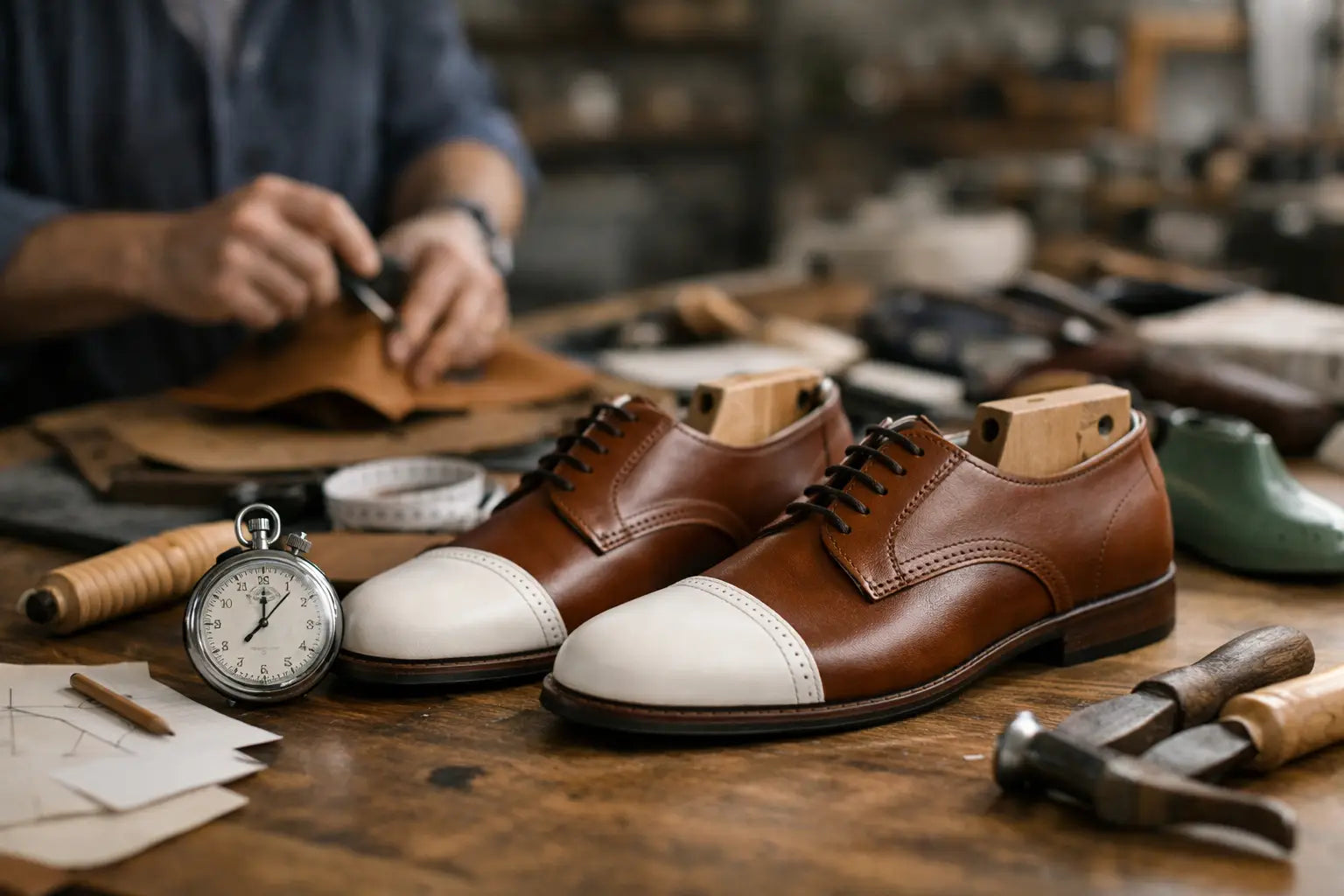
For most luxury made-to-order shoes, a realistic timeline is anywhere from 4 to 12 weeks. That range covers the majority of premium custom orders, especially when the design starts from an existing silhouette and is then personalized through leather selection, heel height, color, ornament, or finishing details.
A more involved bespoke commission can take 8 to 16 weeks, and occasionally longer. If the shoe is being developed from scratch, if the fit requires adjustments, or if the design includes couture-level craftsmanship such as hand-applied embellishment or unusual construction, the calendar expands accordingly.
This is not delay for its own sake. It is the visible cost of discretion, craftsmanship, and exacting standards. Luxury is often defined by what refuses to be rushed.
What shapes the timeline most
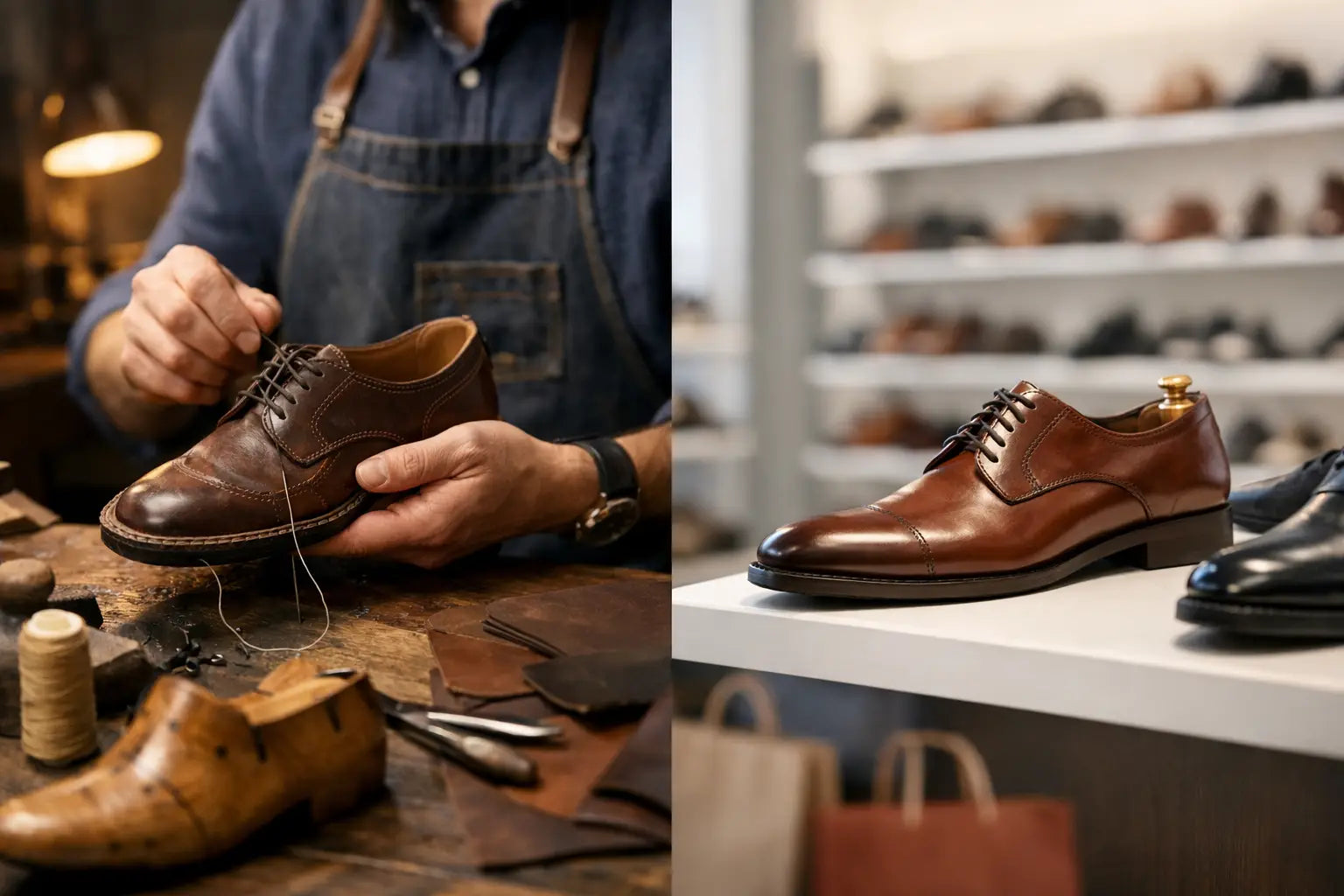
The first factor is the level of customization. There is a meaningful difference between made-to-order and bespoke, even though the terms are often used interchangeably. Made-to-order usually means a known design is produced after purchase in the client’s selected options. Bespoke means the shoe is built around the individual client’s preferences and, in some cases, their measurements or fit requirements.
The second factor is materials. Certain leathers, satins, exotic textures, specialty hardware, and custom-dyed finishes are not always immediately available. Even in an established atelier, sourcing the right material can add days or weeks. Fine materials are chosen for beauty, but they also require patience.
The third is construction complexity. A minimalist mule in a classic leather is not produced on the same schedule as a thigh-high boot, a crystal-finished heel, or an evening shoe with multiple hand-finished elements. More structure means more labor. More labor means more time.
Then there is fit. If a client has specific comfort concerns, asymmetry between feet, width preferences, or a request for additional support, the process becomes more technical. That is often exactly why custom footwear is worth pursuing, but it can lengthen production because the result must feel as exquisite as it looks.
The custom shoe process, step by step
Every maison has its own cadence, but the broad stages are similar.
Design selection and customization
The process begins with the style itself. Sometimes the client already knows exactly what she wants: a sculpted stiletto in satin, a sharp boot in polished leather, a sandal adjusted to a preferred heel height. Other times, refinement happens through conversation and edits.
This early stage may be swift or it may take time, especially when choices are highly specific. Color, lining, shape, trim, and hardware all need final approval before production can begin. The clearer the direction, the smoother the timeline.
Material sourcing and preparation
Once the design is approved, the selected materials must be reserved, prepared, and matched to the order. In luxury footwear, consistency matters. The leather must have the right hand, the finish must feel intentional, and the components must support the final silhouette.
If a requested material is rare or in limited supply, this stage can become the longest variable. Clients who choose unusual textures or event-specific shades should expect a little more time in exchange for a more distinctive result.
Pattern making and cutting
For bespoke work, the pattern may need to be created or modified before construction starts. This is where craftsmanship becomes technical rather than decorative. The pattern determines not only the look of the shoe but how it will sit on the foot, where pressure is distributed, and how the upper meets the sole.
After that, cutting begins. Precision here matters enormously. In luxury footwear, the difference between beautiful and unforgettable is often measured in millimeters.
Construction and finishing
This is the heart of the timeline. The upper is assembled, shaped, and attached. The heel is set. The lining, sole, and edges are finished. If the design includes embroidery, crystals, contrasting piping, or hand-painted details, those elements are often completed during this stage or just after structural assembly.
Finishing cannot be treated as an afterthought. It is where refinement becomes visible. A shoe may be technically complete before it is aesthetically ready.
Quality control and shipping
Before dispatch, the pair should be inspected carefully for symmetry, finish, comfort standards, and overall presentation. That final review is especially important in bespoke and made-to-order luxury, where the expectation is not simply that the shoes arrive, but that they arrive with presence.
Shipping then adds its own timeline, particularly for international orders. Customs, seasonal volume, and destination country can all affect delivery windows.
Why some orders take longer than expected
Even when an estimated lead time is given upfront, custom orders can move beyond the original window. That does not always signal a problem. Often, it reflects the realities of handmade production.
High-demand seasons are one reason. Bridal periods, holiday dressing, and major social-event calendars place pressure on ateliers because many clients are ordering occasion shoes at once. If you need a pair for a wedding, gala, or milestone celebration, ordering early is not cautious. It is wise.
Client revisions can also extend the schedule. A change in heel height, leather, or embellishment after production has begun may require materials to be reordered or parts of the process to be repeated. The more decisive the design phase, the more protected the completion date.
There is also the question of standards. A serious luxury house will sometimes hold an order back rather than release a pair that does not meet expectation. For a client waiting on a special piece, that can feel frustrating. Yet it is usually the better outcome. Delay is inconvenient. Disappointment is lasting.
How long do custom shoes take for events?
If the shoes are intended for a specific date, a comfortable planning window is 10 to 12 weeks before the event. That leaves room for customization, production, quality control, and shipping without placing the entire process under unnecessary strain.
For more elaborate designs, or for clients who know they may need fit adjustments, 12 to 16 weeks is even better. This is especially true for bridal footwear, formal evening shoes, or statement boots that anchor an entire look.
Ordering custom shoes a month before a major event is possible in some cases, but it is not ideal. Rush timelines narrow your design choices and leave less room for corrections. The most elegant purchases are rarely the most hurried ones.
What clients can do to avoid delays
The simplest way to keep the process moving is to be clear from the start. Know the occasion, the heel range you will actually wear, and whether your priority is drama, comfort, or a balance of both. A custom order becomes more efficient when the vision is specific.
It also helps to share fit concerns early. If one foot runs slightly larger, if you need more support at the front, or if you know a certain heel pitch feels better than another, say so before production begins. These details are not complications. They are part of what custom craftsmanship is for.
Finally, allow time for the unexpected. The finest shoes are not produced like fast inventory, and that is precisely their appeal. At Charlotte Luxury, the made-to-order mindset is part of the promise: designed with intention, crafted with discipline, and finished to leave an impression that lasts longer than a season.
Custom shoes ask for patience, but they repay it in a way standard retail rarely can. When the pair is made with your proportions, your preferences, and your presence in mind, the wait becomes part of the story. If the shoes matter, give them enough time to become unforgettable.